The basic difference
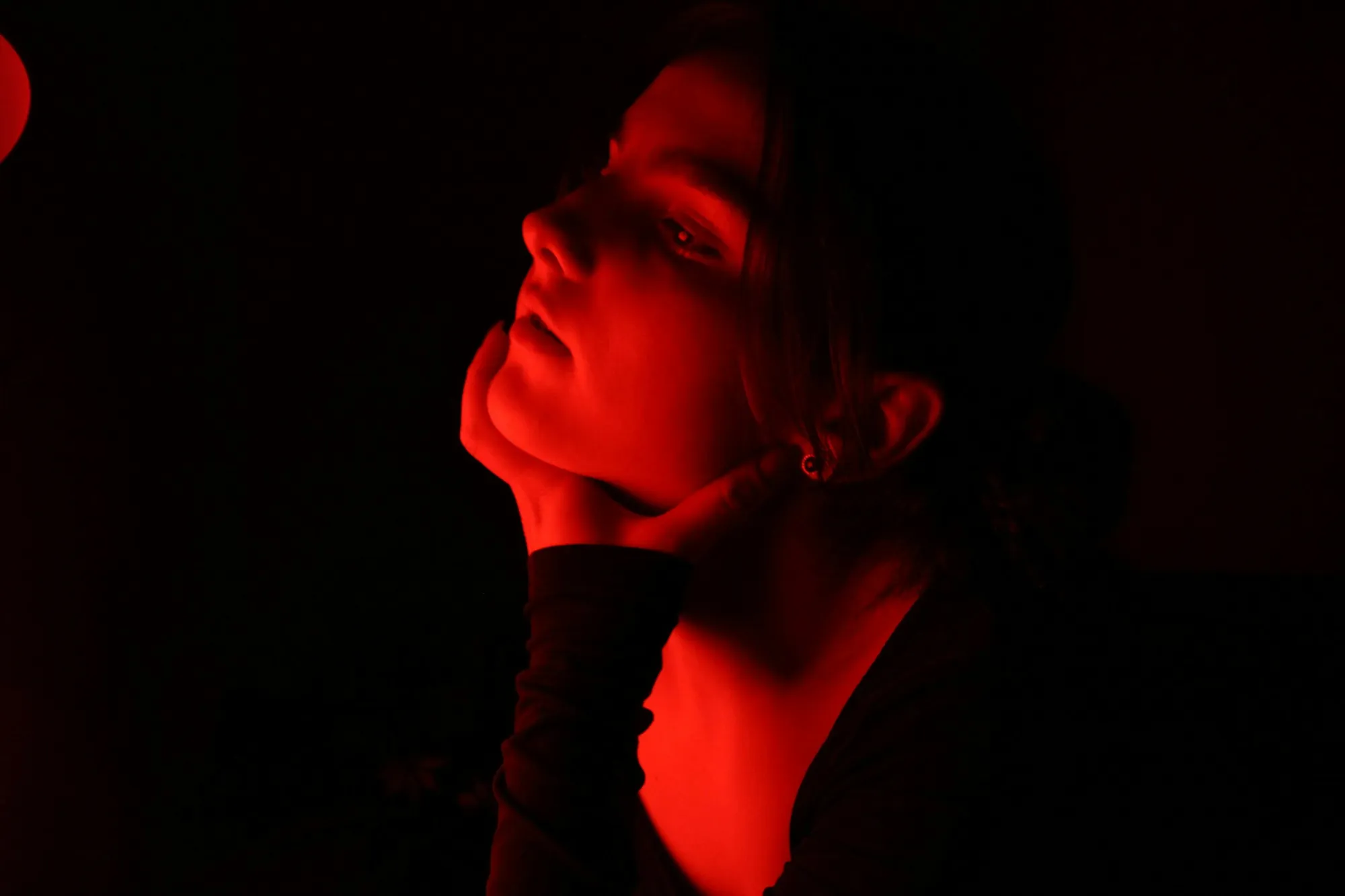
An LED mask is a shaped shell with LEDs on the inside. You put it on, press a button, and it lights your face from a fraction of an inch away. A panel is a flat board of LEDs you sit or stand in front of, at the distance the brand recommends, usually 6 to 24 inches.
That one difference drives everything else: what you can cover, how hands-free it is, how much light reaches your skin, and how you protect your eyes.
Coverage: face only, or everything else too
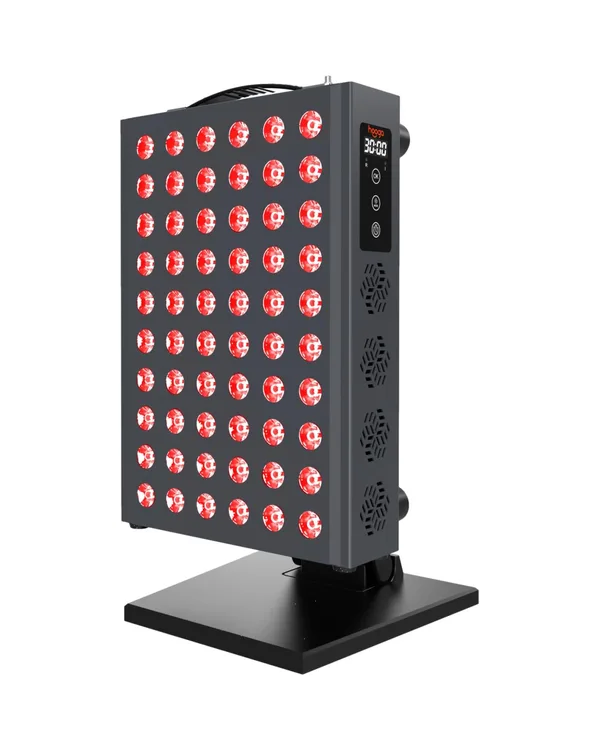
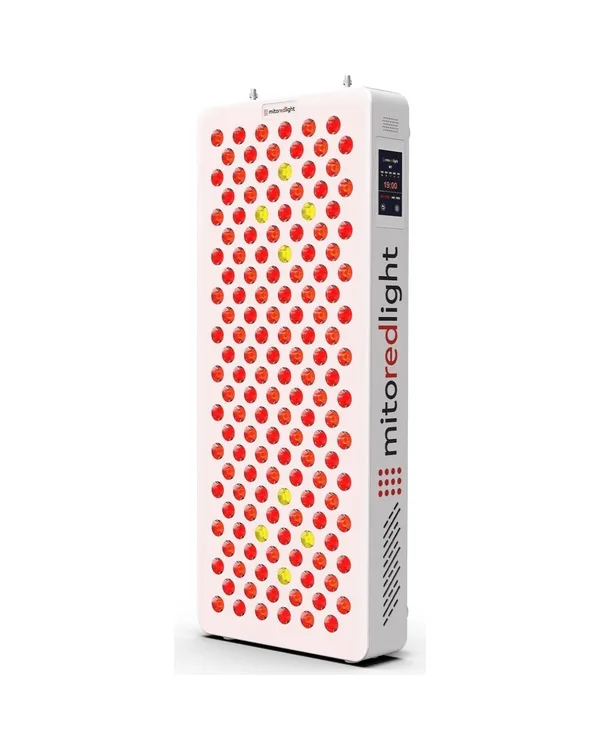
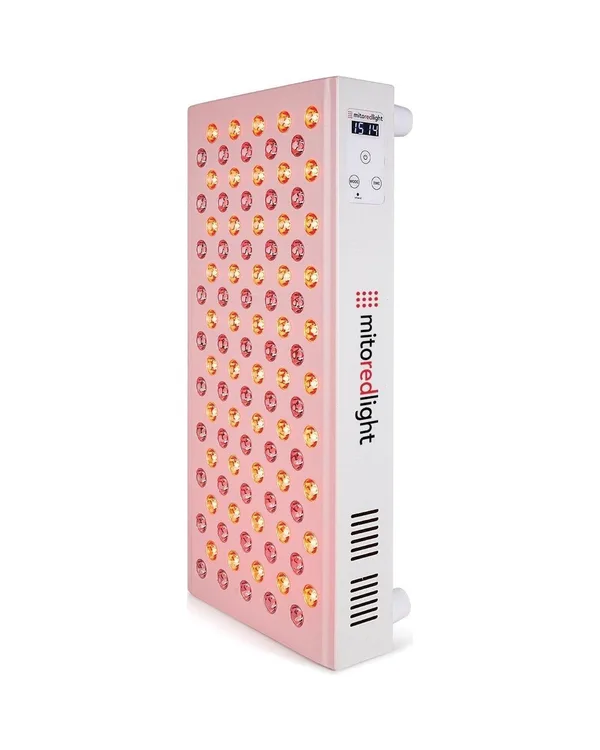
A mask covers your face, and sometimes a neck piece is sold separately. That's it. A panel covers whatever you put in front of it. A small panel (around 100 square inches, like the Hooga PRO300 or HG300) lights your face and neck at desk height, then a knee or a shoulder after a run. A half-body panel like the MitoPRO 750X covers face, neck and chest at once.
If anyone else in your home is curious, a panel is also much easier to share: no fitting, no cleaning the inside of a mask.
Convenience: the mask's big advantage
Be honest about this one, because it decides whether you'll actually use it. A mask lets you walk around, read or make coffee during a session. With a panel, you stay put: you can answer emails or watch a show, but you're sitting in front of it for ten minutes or so. Panels also need a spot: a desk, a door to hang from, or a stand.
If you know you'll only use something that fits into your morning on the move, a mask may win on that alone.
Output and data: where panels pull ahead
Panels publish much more about what they emit. On our list, Mito Red Light gives a lab irradiance figure at 6 inches for its panels, Rouge links a spectrometer reading, PlatinumLED links lab charts, and Hooga gives EMF figures at 6 inches. Face masks tend to give fewer figures, and the very short distance to your skin changes how numbers compare. Before you buy either, look for what we list in our buying checklist: wavelengths, irradiance with a distance, EMF and flicker data, warranty and returns.
Eye safety
Both put bright light near your eyes. With a panel, most brands on our list include goggles or glasses (if yours doesn't, buy a pair): wear them, or keep your eyes closed, especially with near-infrared, which you can't see and so won't blink at. With a mask, follow the maker's instructions carefully: some have eye cut-outs, some ship with inserts. If you have an eye condition or take medication that makes you sensitive to light, ask your doctor first, whichever you choose.
Cost and how long it lasts
The panels on our list start at $199 (Hooga HG300) and $299 (Hooga PRO300), each with a 3-year warranty and 60-day returns per Hooga. Mask prices vary widely; compare the warranty and return window as carefully as the price. A panel is usually the better value per area covered; a mask is the better value only if your face is all you care about and convenience is what will keep you consistent.
Fitting it into your week
The best device is the one you'll still use in March, so think about where it lives. A mask goes in a drawer and comes out on the sofa. A panel needs a spot: the Hooga HG300 has a swing-out kickstand, the Hooga PRO300 ships with a tabletop stand, and the MitoPRO 750X comes with an over-the-door hook and hanging cables (its floor stand was $139 extra on November 12, 2026). Set it up once near a chair or a mirror and the habit gets much easier.
A panel is also easier to share. Two people can take turns in front of the same board, and the person who wants a back or knee session isn't left out. A mask is personal, and you'll need one per face.
Some people end up with both: a mask for the face on busy evenings, a panel for everything else. That's a lot of money for two devices, so start with one. If you can't decide, buy the one with the longer return window and give yourself a month: Hooga and Mito Red Light both list 60 days on the panels we compared.
What to check on a mask page
We don't score masks on this site, but the same rules apply. Before you buy one, look for the wavelengths listed in nanometers, an irradiance figure with the distance or contact condition it was measured at, the brand's FDA wording copied word for word, battery life, the warranty in years and the return window in days. If the page only shows before-and-after photos and a countdown timer, keep looking.
Our verdict
Face only, and you want to move around: a mask makes sense. Face plus anything else, a shared device, or published data: get a small panel. Our favourite for faces is the MitoPRO 750X, flicker-free per Mito Red Light with lab-tested output; the value pick is the Hooga PRO300 with its tabletop stand. See all panels for the face.
This guide is for buying decisions, not medical advice. If you are pregnant, have a skin or eye condition, or take medication that makes you sensitive to light, talk to your doctor before you start.
The panels in this guide, side by side
| Panel | Hooga PRO3009.2/10 | MitoPRO 750X9.5/10 | MitoMID 2.08.9/10 |
|---|---|---|---|
| Price | $299 | $749 | $449 |
| Panel size | 8.6 × 12.7 in | 10 × 23 in | 9 × 19 in |
| Price per sq in | $2.74/sq in | $3.26/sq in | $2.63/sq in |
| Wavelengths | 660 + 850 nm | 6 wavelengths, 590–850 nm | 660 + 850 nm |
| Irradiance (brand claim) | 109 mW/cm² at 6 in | 160 mW/cm² at 6 in | 150 mW/cm² at 6 in |
| EMF | 0.0 μT at 6 in | Claim, no figure | 0.5–1 mG up close |
| Warranty | 3-year | 3-year | 2-year |
| Returns | 60 days | 60 days | 60 days |
| Buy | See price | See price | See price |